
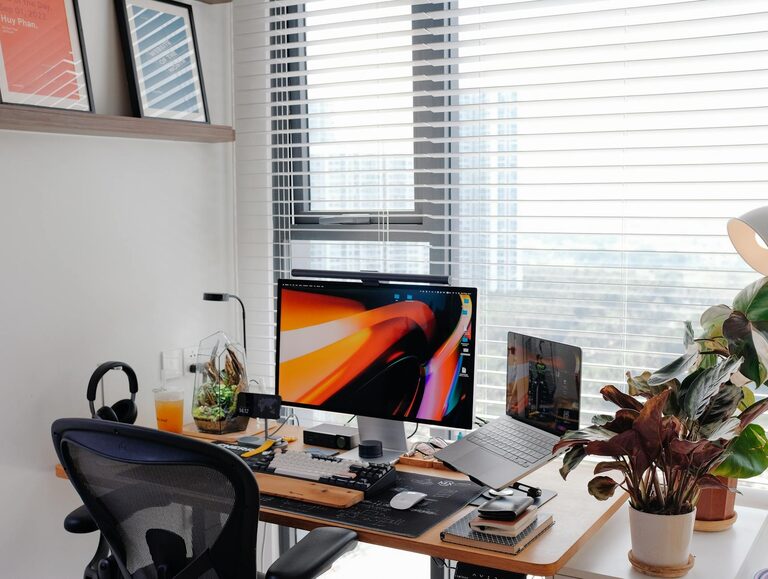
Creating a productive home office environment is essential for anyone working remotely or managing tasks from home. A well-organized and thoughtfully arranged workspace can improve focus, reduce distractions, and increase overall efficiency. Whether you have a dedicated room or a small nook for your office, these tips will help you craft an environment that encourages productivity and well-being.
1. Choose the Right Location
Finding the best spot for your home office is the first step to productivity.
– Quiet and Private: Select a location away from high-traffic areas in your home to minimize interruptions.
– Natural Light: Opt for a space near a window if possible. Natural light can boost mood and reduce eye strain.
– Adequate Space: Make sure there is enough room for your desk, chair, and any necessary equipment.
If space is limited, consider creative solutions like using a corner in your living room or bedroom, but try to establish clear boundaries between work and personal areas.
2. Invest in Comfortable and Ergonomic Furniture
Comfort is key when spending long hours working.
– Ergonomic Chair: Choose a chair with proper lumbar support to maintain good posture and reduce back pain.
– Adjustable Desk: A desk with adjustable height can help you alternate between sitting and standing.
– Monitor at Eye Level: Position your computer screen so the top is at or slightly below eye level to avoid neck strain.
Setting up your workspace ergonomically helps maintain comfort during long workdays, which can improve concentration and reduce fatigue.
3. Organize Your Workspace Efficiently
An organized workspace helps keep your mind clear and tasks manageable.
– Declutter Regularly: Keep only essential items on your desk.
– Storage Solutions: Use drawers, shelves, or baskets to store supplies neatly.
– Cable Management: Use clips or cable organizers to keep wires tidy and out of the way.
A clutter-free environment minimizes distractions and helps you stay on task.
4. Optimize Lighting
Lighting plays a big role in your productivity and comfort.
– Combine Natural and Artificial Light: Use natural daylight whenever possible, supplemented by adjustable desk lamps with soft, warm light.
– Avoid Glare: Position your monitor perpendicular to windows to prevent glare.
– Use Task Lighting: For detailed work, a focused light source can reduce eye strain.
Good lighting keeps you alert and reduces headaches caused by poor visibility.
5. Minimize Noise and Distractions
Maintaining focus requires managing sound and activity around you.
– Noise-Canceling Headphones: If household noise is an issue, headphones with noise cancellation can help.
– White Noise or Soft Music: Background sounds like white noise or ambient music may improve focus for some people.
– Set Boundaries: Communicate your work schedule to family members or housemates to minimize interruptions.
A calm and quiet environment supports concentration and helps get tasks completed efficiently.
6. Personalize Your Space
Adding a few personal touches can make your workspace inviting and motivating.
– Plants: Indoor plants improve air quality and add a calming natural element.
– Artwork or Photos: Display images that inspire or relax you.
– Color Choices: Choose colors that positively impact your mood—soft blues or greens promote calmness, while yellows and oranges can boost energy.
Personalization helps create a space where you enjoy spending time, which can improve productivity.
7. Keep Technology Up to Date
Reliable technology supports smooth workdays.
– Fast Internet: Ensure your internet connection is stable and fast enough for your tasks.
– Essential Devices: Use equipment like a good-quality keyboard, mouse, and headset to make work easier.
– Regular Maintenance: Keep your computer and software updated to avoid technical issues.
Having technology that works well prevents frustration and downtime.
8. Establish a Routine
Designing your environment goes hand in hand with setting good habits.
– Set Work Hours: Define clear start and end times for your workday.
– Breaks: Take regular breaks to stretch, hydrate, and rest your eyes.
– End-of-Day Ritual: Tidy your workspace and plan tasks for the next day to help separate work from personal time.
A routine helps maintain productivity and work-life balance when working from home.
—
Creating a productive home office environment takes some planning and effort, but the benefits are significant. By choosing the right location, investing in ergonomic furniture, organizing efficiently, and establishing a routine, you can build a workspace that supports focus, comfort, and success. Start with small changes and adjust as needed to find what works best for you.